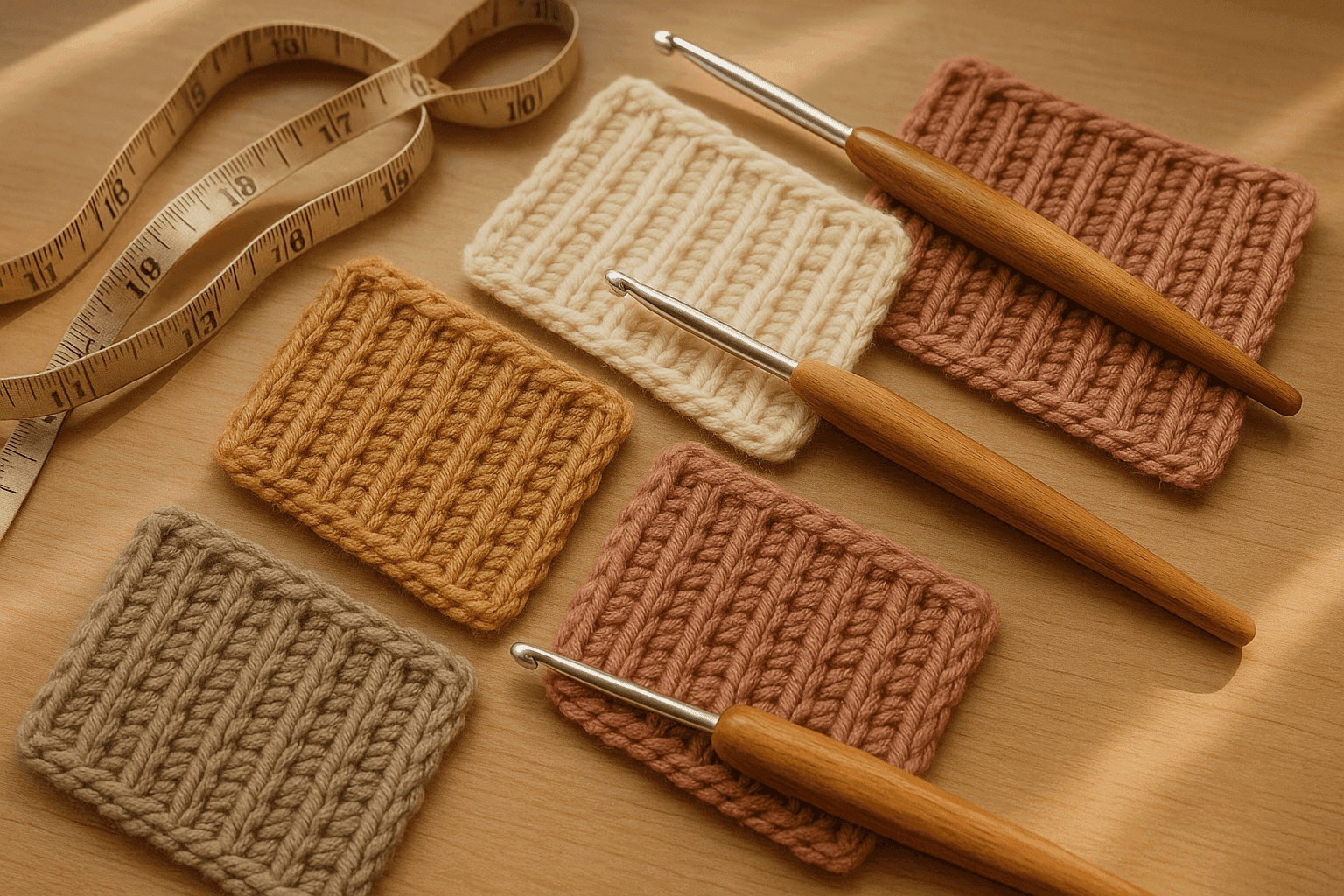
There is a particular kind of disappointment that every crocheter eventually meets: the cuff that looks perfect on the table, slides over the hand beautifully, and then spends the rest of its life hanging off the wrist like it has given up. Or the hat brim that starts crisp and tailored, only to grow a sulky wave after an afternoon of wear. Or the cardigan band that seemed polished when you seamed it on, but within a week begins to ripple, torque, or stand away from the body. We talk a lot in crochet about “stretch,” but stretch is only half the story. What most garments and accessories need is recovery: the ability to return, repeatedly and reliably, to their intended shape.
That difference between simple give and true snap-back is where ribbing becomes less about decorative texture and more about engineering. If you understand how each style of crochet rib is built, what direction it stretches most readily, and how the fiber itself participates in memory, you can make bands that behave the way knitters expect ribbing to behave. Not identically to knitted rib, because crochet is a different structure entirely, but with enough strategy that your cuffs hug, your waistbands support, your hat brims stay neat, and your neckbands sit cleanly instead of flopping outward.
In this guide, we are going to look closely at the main crochet rib families: front/back post rib, back-loop-only rib, slip-stitch rib, and half-double variations. We will compare them through stitch architecture, vertical versus lateral elasticity, snap-back, and long-term bagging. Then we will match those structures to fibers: wool, cotton, acrylic, and elastic-enhanced blends. We will talk hook size, row orientation, stitch counts, ratio planning for different applications, and the finishing choices that preserve stretch instead of quietly strangling it. Finally, we will troubleshoot the issues that show up after wear, not just after blocking: flaring, tunneling, twisting joins, rippling, and torque.
If you have ever made a ribbed band that looked right but behaved wrong, this is the conversation worth having.
What makes crochet ribbing elastic in the first place?
Crochet stitches are locked loops. Compared to knitting, where live loops can redistribute movement more fluidly, crochet tends to create a denser and more structurally fixed fabric. That can be an asset for durability, but it also means crochet does not become elastic just because it has ridges. For a rib to recover well, three things need to work together:
- Stitch architecture: how the loops stack, where bulk accumulates, and whether the fabric bends or compresses easily.
- Direction of construction: whether the ribs run parallel or perpendicular to the edge, which changes whether the band stretches in width or length.
- Fiber memory: whether the yarn itself wants to spring back after extension.
A useful shorthand is this:
- Dense, sideways-built ribs often give the best visible compression and cuff-like behavior.
- Post-stitch ribs create dramatic texture but usually less true contraction and recovery.
- The more inelastic the fiber, the more the stitch pattern has to do the work.
- The looser the hook relative to the yarn, the faster a rib may relax into bagginess.
Elasticity in crochet is often directional. A rib worked in short rows across the band will usually stretch differently than one worked in rounds around the band. Before choosing a rib style, ask a practical question: Where do I need the give? Around the body? Over the hand? Along the edge opening? Or mostly just enough flexibility to put the piece on and off?
The four main rib structures and how they behave
1. Front-post/back-post ribbing
This is the rib most crocheters learn first for hat brims and sweater edges. Usually it is made by alternating front post double crochet (FPdc) and back post double crochet (BPdc), though you can also use treble, half double, or even single crochet post stitches.
Architecture: Post stitches wrap around the posts of the stitches below instead of going into the top loops. Front-post stitches push columns toward the viewer; back-post stitches push columns away. That creates the visual valleys and ridges we read as ribbing.
Elastic profile:
- Moderate stretch
- Better visual rib effect than actual contraction
- Fair to poor snap-back unless fiber helps significantly
- More prone to long-term bagging than sideways short-row ribs
Best uses:
- Hat brims when you want speed and texture
- Sweater hems with mild shaping needs
- Decorative cuffs that do not need firm grip
- Structured outerwear where “rib look” matters more than “hugging recovery”
Common stitch setup: A classic 1x1 look in crochet is simply alternating FPdc and BPdc around a round or across a row.
Sample swatch:
- Yarn: worsted weight wool or wool blend
- Hook: 5.0 mm for a standard fabric, 4.5 mm for firmer recovery
- Foundation: chain 24, dc in 4th chain from hook and across = 22 dc
- Row 1: ch 2, turn, FPdc around next st, BPdc around next st repeat across = 22 sts
- Repeat Row 1 for 12 rows
What to expect: It will stretch some across the columns, especially in a softer wool. But if you hang weight from it or repeatedly pull it open, it tends to lengthen and stay more open than a slip-stitch or BLO rib would.
Engineering note: Post ribbing is strongest when the base stitch is not too tall. FP/BPhdc has better compactness and often better recovery than FP/BPdc. Tall stitches add air and leverage, which increases drape but reduces spring.
2. Back-loop-only ribbing in rows
This is the workhorse crochet rib for many garment makers. You work a simple stitch, usually single crochet or half double crochet, through the back loop only. The unworked front loops form horizontal ridges, and the fabric bends readily along those ridge lines.
Architecture: Because only one loop is anchored each time, the row gains a hinge-like flexibility. Worked in rows and then turned so the rows run perpendicular to the garment edge, it behaves much more like a real contracting band than post rib does.
Elastic profile:
- Good lateral stretch
- Good visual compression
- Fair to good recovery depending on stitch height and fiber
- Better long-term performance than post rib, especially in firmer gauges
Best uses:
- Hat brims
- Sweater cuffs and hems
- Cardigan bands
- Neckbands with controlled pickup ratios
Typical construction: Short rows worked across the desired rib depth, then the strip is seamed into a ring or attached as you go.
Sample swatch: sc BLO rib
- Yarn: DK or worsted wool blend
- Hook: 4.0 mm for DK, 4.5 mm for worsted
- Chain 11
- Row 1: sc in 2nd ch from hook and across = 10 sc
- Row 2: ch 1, turn, sc BLO across = 10 sc
- Repeat Row 2 for 24 rows
The 10 stitches create the rib depth; the 24 rows create the circumference or edge length.
What to expect: This rib stretches well along the row direction. Because the rows are narrow and the turning lines create folding points, the band compresses neatly and recovers better than many in-the-round ribs.
Engineering note: sc BLO is firmer and springier than hdc BLO. hdc BLO is softer, a little taller, and often more comfortable on larger surfaces like waistbands or broad hems. If recovery is your top priority, start with sc BLO. If comfort and speed matter and you have a memory-rich fiber, hdc BLO can be an excellent compromise.
3. Slip-stitch ribbing
This is the closest crochet comes to the compact springiness people often want from knitted rib. It is slower. It is less forgiving. It is absolutely worth learning.
Architecture: Slip stitches create very short rows with tightly nested loops. Worked in BLO, they form dense, fine ribs with substantial compressive ability. The fabric can stretch dramatically relative to its resting width and, when paired with the right fiber and hook, recover far better than taller crochet stitches.
Elastic profile:
- Excellent lateral elasticity for crochet
- Excellent snap-back relative to other crochet ribs
- High resistance to long-term bagging when worked firmly
- Dense fabric with lower drape
Best uses:
- Hat brims that need real hold
- Cuffs that should cling
- Neckbands on pullovers
- Waistbands when paired with negative ease and suitable fiber
- High-end cardigan bands where polish matters
Sample swatch: sl st BLO rib
- Yarn: sport or DK wool, wool blend, or elastic-blend yarn
- Hook: 3.5 mm for DK, often 0.5–1.0 mm smaller than label recommendation
- Chain 13
- Row 1: sl st in 2nd ch from hook and across = 12 sl sts
- Row 2: ch 1, turn, sl st BLO across = 12 sl sts
- Repeat Row 2 for 32 rows
What to expect: The row count grows slowly, and the fabric may curl slightly before blocking. But this rib usually offers the best cuff behavior of the major crochet methods.
Engineering note: If your slip-stitch rib feels rigid instead of elastic, your tension may be too tight for the chosen hook. Slip stitch needs compactness, but not strangulation. Many crocheters benefit from consciously loosening the loop height slightly while still using a smaller hook.
4. Half-double variations
Half double crochet occupies the useful middle ground: shorter and firmer than double crochet, more flexible and faster than single crochet or slip stitch. This family includes plain hdc BLO, third-loop hdc bands, and front/back post hdc rib.
Architecture: Hdc has enough body to create defined ribs while staying relatively compact. Worked BLO in rows, it makes a supple, stretchy rib. Worked as FPhdc/BPhdc, it creates rounded ridges with less height and wobble than FPdc/BPdc.
Elastic profile:
- hdc BLO: good stretch, moderate to good recovery
- third-loop hdc bands: stable edges, less ribby contraction
- FP/BPhdc: moderate stretch, better than dc-post but not as strong as sideways BLO or sl st
Best uses:
- Everyday sweater hems
- Children’s garments where comfort matters
- Broad cuffs or folded cuffs
- Casual waistbands
Sample swatch: hdc BLO rib
- Yarn: worsted wool blend or acrylic/wool blend
- Hook: 4.5 mm
- Chain 13
- Row 1: hdc in 2nd ch from hook and across = 12 hdc
- Row 2: ch 1, turn, hdc BLO across = 12 hdc
- Repeat Row 2 for 24 rows
What to expect: More softness and drape than sc BLO, more speed than slip stitch, and enough recovery for many garment applications if the fiber supports it.
Comparing lateral vs vertical elasticity
This is where many ribbing choices either succeed brilliantly or disappoint quietly.
Sideways-built ribs
When you work short rows across the depth of a band and then use the row count as the circumference, the stretch happens across the rows. This gives you strong contraction around openings such as wrists, head openings, or cardigan fronts. Slip stitch BLO, sc BLO, and hdc BLO are all typically used this way.
Strengths:
- Excellent for cuffs, hat brims, waistbands, fronts, neckbands
- Rows act like mini springs
- Easy to tune by adding or removing rows
Weaknesses:
- Requires seaming or careful join planning
- Row gauge matters more than usual
- Can torque if attached unevenly
In-the-round or along-edge ribs
When you work a ribbed pattern directly around the opening, especially with post stitches, the stretch is shaped by column movement and stitch height rather than short-row hinge action.
Strengths:
- Fast, convenient, visually attractive
- Easy to continue from body fabric
- Good for mild elasticity needs
Weaknesses:
- Often more decorative than truly contracting
- Less precise control over negative ease
- More prone to bagging with plant fibers or loose gauge
If you need a band to hold, sideways construction usually wins.
Fiber-blend strategy: the yarn is half the mechanism
You cannot ask cotton to behave like wool just because the stitch pattern looks ribbed. Fiber choice matters enormously.
Wool
Wool is the easiest path to recovery because the fiber itself has natural crimp and resilience.
Behavior in ribbing:
- Strong memory
- Good snap-back
- Tolerates repeated expansion and return
- Especially effective in sc BLO and slip-stitch rib
Best for:
- Hat brims
- Cuffs
- Neckbands
- Waistbands with negative ease
Watch for:
- Superwash wool can relax more than non-superwash
- Very soft merino may bloom and soften the rib definition
Recommendation: If you want the most reliable crochet rib recovery, choose a non-superwash wool or wool-rich blend first.
Cotton
Cotton has lovely stitch definition and a cool hand, but limited elasticity and memory.
Behavior in ribbing:
- Stretches under weight, especially when worn
- Weak snap-back
- Can bag at elbows, cuffs, and necks
- BLO textures show beautifully, but recovery is limited
Best for:
- Decorative rib looks
- Light summer cardigans where grip is not critical
- Cardigan fronts stabilized by structure
Watch for:
- Neckbands that grow
- Waistbands that collapse
- Hat brims that lose hold after a few wears
Recommendation: For cotton, use the densest practical rib structure: slip-stitch BLO or firm sc BLO, smaller hook, and less negative ease than you would use in wool. Consider cotton blended with elastic or wool for performance bands.
Acrylic
Acrylic varies wildly. Some spring back decently; some become limp with wear; some have a bouncy hand initially but lose crispness under heat or laundering.
Behavior in ribbing:
- Moderate apparent elasticity
- Recovery depends heavily on yarn quality and twist
- Can relax permanently if blocked too aggressively with heat
Best for:
- Everyday hats and cuffs
- Budget-friendly cardigans
- Children’s garments
Watch for:
- Steam setting the rib open
- Pill-prone yarns making ribs look fuzzy and less defined
Recommendation: Test a swatch by stretching it firmly 10–15 times. If it returns close to width each time, the yarn can work. Use a slightly smaller hook than you expect.
Elastic-blend yarns
These include yarns with small percentages of elastic fibers or blends engineered for sock knitting and performance wear.
Behavior in ribbing:
- Enhanced recovery
- Better resistance to bagging
- Especially helpful in waistbands and cuffs
Best for:
- Socks and slipper cuffs
- Waistbands
- Child garments requiring durable rebound
- Cotton-rich projects that need extra help
Watch for:
- Over-tight fabric if you combine small hooks with naturally springy yarn
- Uneven tension becoming more visible
Recommendation: When using elastic-enhanced yarn, swatch at least two hook sizes. The most elastic fabric is not always the best-wearing one; a slightly more open fabric may be more comfortable while still recovering well.
Hook size, gauge, and memory
If your ribbing bags out, the hook is often part of the story.
General rule
For ribbing, you usually want a hook 0.5 mm to 1.5 mm smaller than the hook used in the main fabric, depending on stitch and yarn.
Why smaller hooks help
- Reduce excess slack in each loop
- Increase column support
- Improve edge definition
- Limit long-term growth
But too small causes its own problems
- Restricted stretch instead of elastic stretch
- Hard, boardy cuffs
- Difficulty inserting hook consistently
- Distorted joins and tunneling
Practical starting points
- Slip-stitch rib: 1.0–1.5 mm smaller than main fabric hook
- sc BLO rib: 0.5–1.0 mm smaller
- hdc BLO rib: 0.5–1.0 mm smaller
- FP/BPdc rib: 0.5 mm smaller, or same hook if yarn is firm wool
Always test recovery, not just gauge. Stretch the swatch to realistic use width, hold for 10 seconds, release, and measure how close it returns after 1 minute.
Step-by-step: designing a rib that actually recovers
Here is a practical workflow you can use for any band.
Step 1: Decide the job of the band
Ask what the band must do:
- Neckband: lie flat, expand enough for dressing, return neatly
- Waistband: support garment weight, resist rolling, recover after sitting
- Cuff: pass over hand, then contract at wrist
- Hat brim: stretch over head, then sit snugly
- Cardigan front: stabilize edge without rippling or flaring
If the band has a demanding job, choose slip-stitch BLO or sc BLO before considering post stitches.
Step 2: Choose rib orientation
- For maximum contraction around an opening, use sideways short-row rib.
- For moderate flexibility and integrated construction, use in-the-round post rib.
- For polished but softer behavior, use hdc BLO.
Step 3: Choose fiber intentionally
- Maximum recovery: wool or wool-rich blend
- Structured but less elastic: acrylic with good spring
- Minimal natural recovery: cotton, unless blended with elastic or wool
Step 4: Make a functional swatch
Do not make a tiny square. Make a ribbing swatch that mimics the actual band.
For example, for a cuff swatch:
- Chain to cuff depth: 9–13 stitches is common
- Work at least 3–4 inches / 7.5–10 cm of rows
- Measure resting width and stretched width
- Stretch repeatedly 10 times
- Let rest, then remeasure
Sample cuff swatch plan:
- Yarn: DK wool blend
- Hook: 4.0 mm main fabric, 3.5 mm rib
- Chain 11
- Work sc BLO for 28 rows = approximately 4 inches long
If the swatch begins at 4 inches relaxed and stretches to 6 inches comfortably, then returns to 4.25 inches after repeated stretching, recovery is good. If it returns to 4.75 inches, expect bagging.
Step 5: Calculate the target length with negative ease
Negative ease means the band is smaller than the body part or edge it fits around.
Starting negative ease guidelines
- Neckbands: 5–12%
- Hat brims: 10–20%
- Cuffs: 10–20%
- Waistbands: 8–15% depending on support needed and yarn recovery
- Cardigan fronts: usually minimal negative ease; often 0–5% with stabilization
Example: cuff Wrist measures 7 inches. You want 15% negative ease.
7 × 0.85 = 5.95 inches target relaxed circumference.
If your sc BLO rib gets 6 rows per inch, then: 5.95 × 6 = 35.7 rows
Round to 36 rows for the cuff strip.
Step 6: Match rib depth to function
Deeper rib is not automatically better.
Typical depths:
- Neckbands: 0.75–1.5 inches
- Cuffs: 1.5–3 inches
- Hat brims: 1.5–3 inches before folding, 2.5–4 inches for fold-over
- Waistbands: 1.5–4 inches depending on style
- Cardigan fronts: 1–2.5 inches
A very deep rib in a low-memory fiber can collapse or flare. If using cotton, keep rib depth moderate unless you add reinforcement.
Step 7: Attach with the right ratio
This is where beautifully worked ribs often go wrong.
Sideways rib attached to vertical garment edge
Because row gauge and stitch gauge differ, you need a pickup or attachment ratio.
Starting ratios:
- sc BLO rib to sc or hdc body edge: attach 3 rib rows to 2 body rows, or 4 to 3 depending on gauge
- sl st BLO rib: often 4 rib rows to 3 body rows
- hdc BLO rib: often 1 rib row per 1 body row on many gauges, but test carefully
You want the band to lie flat without forcing the garment edge to gather or stretch.
Step 8: Finish without killing stretch
Use joins and edgings that support the rib instead of locking it open or shut. More on that below.
Ratios and recommendations by application
Neckbands
A neckband needs controlled expansion with crisp recovery. Too loose and it stands away from the body; too tight and it strangles the neckline or distorts the shoulder line.
Best choices:
- slip-stitch BLO
- sc BLO
- hdc BLO
- FP/BPhdc for less structured garments
Starting ratio: Work band at 88–95% of neckline circumference, depending on yarn.
Example: Neck opening = 20 inches Target band = 18.5 to 19 inches in wool; 19 to 19.5 inches in cotton blend
Stitch depth:
- adult pullovers: 6–12 stitches deep in sl st or sc rib is often enough
Common mistake: Picking up one rib row to one neckline stitch without checking ratio, creating tunneling or flare.
Waistbands
Waistbands carry weight and endure repeated stretch from dressing and sitting. Recovery matters more here than visual rib illusion.
Best choices:
- slip-stitch BLO
- sc BLO
- hdc BLO with elastic thread or performance yarn
Starting ratio: Band at 85–92% of waist or high-hip measurement depending on style and closure.
Practical note: For pull-on garments in cotton or acrylic, consider adding a concealed elastic sewn inside the waistband casing or through the wrong side of the rib valleys.
Depth:
- 1.5–3 inches for standard
- 3–4 inches for supportive high waist
Cuffs
Cuffs need to pass over the hand but recover at the wrist.
Best choices:
- slip-stitch BLO
- sc BLO
- hdc BLO
- post rib only if a relaxed cuff is acceptable
Starting ratio: Use wrist measurement if the cuff is put on after shaping, or hand measurement if the cuff must pass over the hand opening first.
A common strategy is to size the cuff at 85–90% of wrist, but ensure sleeve shaping above allows passage over the hand.
Depth:
- 1.5–2 inches for standard cuffs
- 2.5–4 inches for fold-back cuffs
Hat brims
This is where crochet rib can shine.
Best choices:
- sl st BLO
- sc BLO
- hdc BLO
- FP/BPdc for quick hats
Starting ratio: Brim circumference generally 80–90% of head circumference depending on yarn and rib.
Example: Head circumference = 22 inches
- wool sl st rib target = 18.5–20 inches
- acrylic sc BLO target = 19.5–20.5 inches
Typical stitch counts: For a beanie brim in worsted with 4.5 mm hook:
- chain 11 for a 10-stitch-deep sc BLO brim
- work about 54–66 rows depending on gauge and desired snugness
Cardigan fronts
These bands are less about gripping and more about stabilizing the edge while lying cleanly.
Best choices:
- sc BLO or hdc BLO for sewn-on or joined-as-you-go bands
- slip stitch for polished dense fronts
- post rib only in chunky, relaxed styles
Starting ratio: Usually 95–100% of front edge length, sometimes slightly shorter at the upper chest to reduce gaping.
Tip: Distribute any reduction subtly, not all at the hem or neck. A band that is globally too short will torque the whole front.
Advanced troubleshooting
Problem: the rib flares away from the garment
Causes:
- Too many attachment points along the body edge
- Band is too long for the edge
- Hook too large
- Fiber lacks memory and relaxes outward
- Post-stitch rib chosen for a job needing stronger contraction
Fixes:
- Reduce pickup ratio: for example, attach 3 rib rows to 4 body rows instead of 1:1 if the band is overfeeding
- Go down 0.5 mm in hook size for the rib
- Switch from hdc BLO to sc BLO, or from post rib to sideways rib
- Steam lightly only if fiber allows, but avoid opening the rib further
- For cardigan fronts, add a non-bulky stabilizing line: slip stitch seam on wrong side or fine elastic sewing thread woven through inner valleys
Problem: tunneling at the attachment seam
“Tunneling” means the join line forms a groove, trench, or hinge that pulls the band inward awkwardly.
Causes:
- Attachment is too tight compared with the body edge
- Joining into only one loop creates a weak fold line where a fuller join is needed
- Very dense rib attached to a lofty body fabric without ratio adjustment
Fixes:
- Rework using a gentler ratio
- Try sewing the band on with mattress stitch or whip stitch through full edge loops instead of slip stitching too tightly
- Add one transition round of sc or hdc around the neckline or cuff edge before attaching the rib
- For slip-stitch rib, do not yank the join stitches; keep them equal in height to the body edge loops
Problem: twisting joins in rib rings
A brim or cuff ring can twist before seaming, and once attached, the twist becomes permanent and maddening.
Causes:
- Ring joined without aligning first and last rows carefully
- Fabric naturally torques from repeated turning direction
- Row-end tension inconsistent
Fixes:
- Lay strip completely flat and use locking stitch markers every 2–3 inches before joining
- For invisible seam in BLO rib, join first and last row with slip stitch or sewn seam through corresponding loops, checking ridge alignment
- Consider a stacked-row or chainless turning method if one edge keeps tightening
- Block the strip flat before final attachment if yarn allows
Problem: band ripples after wear
Causes:
- Fiber relaxes under gravity or moisture
- Band was calculated with too little negative ease
- Hook too large or stitch too tall
- Body edge is heavier than band can control
Fixes:
- Rework shorter by 5–10%
- Change to denser stitch structure
- Use wool-rich yarn for the band even if body is another fiber, if the design permits
- Insert fine elastic thread on wrong side, especially for waistbands and necklines
- Avoid hanging the garment by the band during storage
Problem: torque or spiraling after wear
Causes:
- Uneven attachment ratio around the edge
- Single directional bias from yarn ply or personal tension
- Sideways rib attached while stretched inconsistently
Fixes:
- Divide body edge and rib into quarters or eighths and match markers before attachment
- Recheck whether one side was attached under tension and the other relaxed
- Wet block the body and rib separately before joining to remove temporary bias
- In severe cases, seam on the band rather than joining as you go, because sewing allows more controlled distribution
Problem: band bags out permanently at elbow, wrist, or hem
Causes:
- Cotton or soft acrylic with low memory
- Hook too large
- Hdc or dc post rib used where sl st or sc BLO was needed
- Excessive stretching during wear relative to the band’s recovery limit
Fixes:
- Frog and rebuild with firmer gauge and denser rib
- Reduce band circumference by 8–15%
- Blend in elastic thread on wrong side
- For future projects, swatch with repeated wear simulation, not just a single measurement
Finishing methods that keep edges crisp without strangling stretch
A good rib can still fail at the finishing stage if the bind-off edge or seam is too rigid.
Best seam options for rib rings
Slip stitch seam through corresponding loops
- Good for sl st BLO and sc BLO rib
- Keep seam loops slightly relaxed
- Align ridges carefully for a near-invisible finish
Mattress stitch
- Excellent for polished cardigan bands and cuffs
- Preserves flexibility better than a tight crochet seam
- Ideal when you want ridge continuity and less bulk
Whip stitch through back bars or outer loops
- Fast and acceptable, but can be less polished
- Use a blunt tapestry needle and avoid overtightening
Edge finishing around attached ribs
A single round/row of slip stitch
- Can sharpen the edge visually
- Use sparingly; too tight and it kills stretch
Crab stitch / reverse sc
- Beautifully crisp, especially on cardigan fronts
- Better for edges that need stability more than maximum stretch
- Avoid on cuffs and neckbands unless worked very lightly
Single crochet edge in matching or slightly smaller hook
- Good compromise between structure and flexibility
- Ideal on cardigan fronts and waistbands
Invisible sewn hem or folded casing
- Best when you need to hide elastic in a waistband
- Particularly useful in cotton garments
A note on blocking
Blocking can improve the look of ribs, but aggressive blocking can destroy the very compression you worked to create.
- Wool: light wet block, pat into shape, do not stretch the rib open unless intentionally setting dimensions
- Acrylic: use extreme caution with steam; too much heat can “kill” the spring
- Cotton: wet blocking may relax the rib; let it dry fully before judging final recovery
- Elastic blends: follow yarn guidance and avoid high heat
For bands, I generally block for alignment and seam settling, not for expansion.
Practical recommendations by priority
If your priority is maximum recovery, choose:
- slip-stitch BLO in wool or wool blend
- sc BLO in wool or elastic blend
- hdc BLO in wool blend
If your priority is speed with decent performance, choose:
- sc BLO
- hdc BLO
- FPhdc/BPhdc
If your priority is decorative rib look, choose:
- FPdc/BPdc
- FPhdc/BPhdc
- hdc third-loop texture
If your priority is cotton summer garment edges, choose:
- firm slip-stitch BLO
- firm sc BLO
- add hidden elastic where fit matters
Key takeaways for ribs that recover
Crochet ribbing becomes reliable when you stop asking one quality to do every job. Stretch is not recovery. Texture is not structure. A rib that looks beautifully columned in a photo may still fail at the wrist or neckline if the stitch architecture, direction, gauge, and fiber are working against one another.
If you remember just a handful of principles, let them be these:
- Sideways short-row ribs usually recover better than post-stitch ribs.
- Slip-stitch BLO gives the strongest spring, sc BLO gives the best balance, and hdc BLO gives softness with respectable performance.
- Wool helps almost every rib recover; cotton asks the stitch pattern to do far more work.
- Smaller hooks usually improve memory, but strangled stitches reduce usable stretch.
- Attachment ratios matter as much as the rib itself. A perfect band can still flare or tunnel if sewn on poorly.
- Bands should be engineered for their actual job: hat brims and cuffs need stronger negative ease than cardigan fronts, while waistbands often benefit from hidden reinforcement.
Most importantly, treat ribbing as a functional component, not an afterthought. Swatch it like hardware. Stretch it repeatedly. Measure it at rest, under load, and after recovery. If you do that, your crochet bands will stop behaving like decoration pretending to be fit, and start acting like the hardworking structural elements they are meant to be.
And that is when crochet ribbing becomes truly satisfying: not just because it looks right when the project is fresh off the hook, but because it still looks right after being worn, tugged, washed, folded, and lived in.