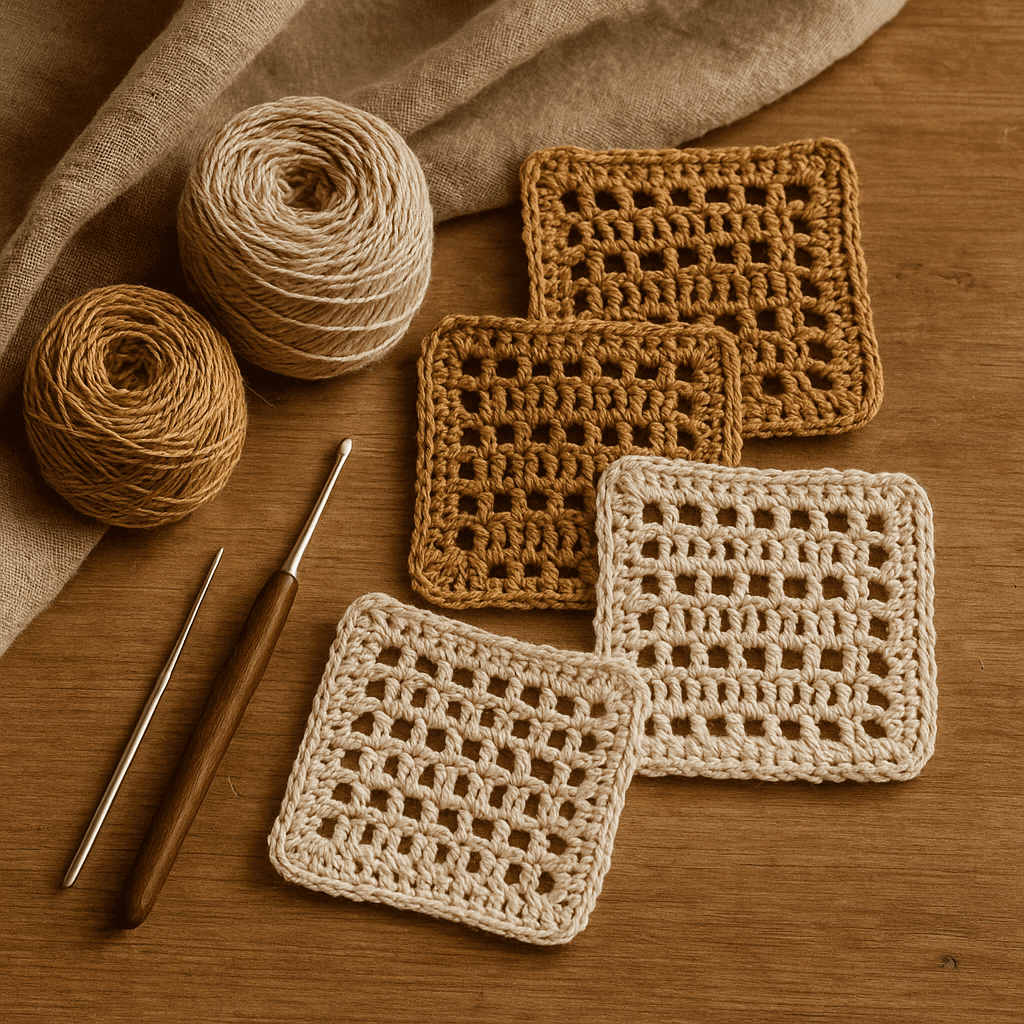
There is a particular moment that happens the first time you crochet with linen or hemp: you chain a few inches, work the first row, and think, "Well, this is… assertive." The yarn may feel wiry. The stitches may look sharper and less forgiving than wool. Your hands may notice immediately that the yarn does not stretch to meet you halfway. And yet, if you keep going, wash the swatch properly, and let the fabric settle, something almost magical happens. What began as a somewhat stubborn plant-fiber fabric can relax into a cloth with fluid drape, elegant stitch definition, and the kind of durability that makes you understand why bast fibers have been valued for centuries.
Linen and hemp reward a different kind of crochet thinking. Instead of depending on elasticity for comfort and recovery, you engineer the fabric through structure, gauge, stitch choice, finishing, and seam strategy. You work with the yarn’s tensile strength instead of fighting for spring. You account for bias because the fibers do not bounce back the way animal fibers do. You choose shapes that let the fabric hang beautifully. And when you do, you can create garments and home pieces that soften over time, wear extremely well, and develop a refined, lived-in beauty that synthetic softness cannot imitate.
This guide is for crocheters who want to understand not only how to use linen and hemp, but why they behave the way they do. We will look at the mechanics of bast fibers, the difference between wet-spun and dry-spun yarns, strategies for softening, stitch and hook decisions, blended-yarn tradeoffs, color behavior, garment and home-dec design choices, finishing and laundering, and the pattern modifications that turn initially crisp yarn into polished, durable crochet with long-term drape.
Understanding bast fibers in crochet
Linen comes from flax, and hemp comes from the bast fibers of the hemp plant. In practical crochet terms, both are plant fibers with three especially important characteristics:
- Low elasticity
- High tensile strength
- A tendency to soften and improve with use and washing
These three traits drive almost every decision you make.
Low elasticity means the yarn does not stretch much while you work it. Wool gives you bounce; bast fibers give you honesty. If your tension is uneven, the yarn will not conceal it. If your stitch pattern wants recovery, the yarn may not provide enough. Ribbing made in linen will not behave like ribbing made in wool. Fitted garments must be designed with ease, shaping, and seaming instead of relying on spring.
High tensile strength means the fibers are strong under tension. This is one reason linen and hemp can create such excellent drape over time: the fibers can withstand use and laundering without quickly abrading into weakness. Strength also makes them ideal for bags, placemats, table runners, market totes, curtains, and summer garments that must support their own weight. But strength comes with a caution: because the fabric can hold weight, a heavy garment can lengthen if the structure is too open or the yarn too dense.
Their softening behavior is perhaps the most encouraging feature. A fresh skein of linen may feel dry, papery, or string-like. Hemp may feel rustic, ropey, or slightly fuzzy depending on processing. After washing, handling, and wear, many bast yarns become distinctly softer while keeping their stitch definition. This means that a swatch fresh from the hook is only part of the story. With plant fibers, finishing is not optional testing; it is part of the engineering.
Wet-spun vs dry-spun structure and why it matters
If you have ever wondered why one linen yarn feels smooth and cool while another feels hairy and rustic, the spinning method is often the answer.
Wet-spun linen
Wet-spun linen is generally smoother, denser, and more polished in appearance. The fibers are spun with moisture, helping align and compact them. In crochet, wet-spun linen often gives:
- Cleaner stitch definition
- Less surface fuzz
- More refined drape once washed
- A crisper initial hand
- Slightly more tendency to split if the plies are slick and compact
This is the linen you often choose when you want a sharper, tailored fabric: summer shells, openwork panels with excellent stitch visibility, heirloom-style table linens, or polished market accessories.
Dry-spun linen or hemp
Dry-spun yarns often feel airier, more textured, and sometimes slightly softer at first touch, though not always smoother. In crochet, dry-spun structures may give:
- More visible fiber halo or surface texture
- A more rustic, matte look
- Slightly less severe crispness initially
- More variation in stitch edges
- Greater tendency toward a casual, relaxed fabric aesthetic
Hemp often occupies this rustic end of the spectrum, though modern processing can produce surprisingly smooth hemp blends. Hemp’s long, strong fibers can create beautifully durable fabrics, but pure hemp sometimes asks for more patience in the softening stage.
What this means for your projects
If you want precise stitch pattern visibility, choose a smoother wet-spun yarn. If you want organic texture and softened rusticity, a dry-spun linen or hemp may be ideal. If you want an easier first bast-fiber experience, a blend is often better than a 100% bast yarn.
The fabric realities: stitch definition, hand feel, bias, growth, and seams
Stitch definition
Plant fibers usually produce excellent stitch definition because they do not bloom like wool. A double crochet shell in linen looks architectural. A filet panel looks crisp. A simple half double crochet fabric can appear almost woven when worked evenly.
The downside is that every inconsistency shows. Uneven loop height, accidental yarn overs, and inconsistent turning chains stand out more clearly.
Hand feel
Fresh off the hook, pure linen and hemp can feel firm or even wiry, especially in dense stitch patterns. That does not necessarily mean you chose badly. It means you need to assess the yarn after washing and handling.
A useful swatch test is this:
- Crochet a swatch at least 6 x 6 in / 15 x 15 cm
- Wash it as you plan to wash the finished piece
- Let one swatch air dry flat
- Gently handle, scrunch, and steam another
- Compare before and after hand feel
Bias
Bias in crochet refers to the fabric’s tendency to slant or skew. Bast fibers can make bias more visible because they lack elasticity and because the structure settles firmly in the direction your stitches naturally lean.
Bias may come from:
- Consistent stitch lean in rows
- Uneven tension between right-side and wrong-side rows
- Certain stitch patterns with directional pull
- Very open gauges that allow the fabric to torque
- Large pieces hanging under their own weight
Linen and hemp will not necessarily “block out” bias permanently the way some wool fabrics can. Bias control must begin in design and construction.
Growth and long-term drape
Unlike wool, bast fibers do not usually rebound upward after stretching. They relax downward. That makes them wonderful for long, elegant drape, but it also means a cardigan hem, sleeve, or openwork panel can lengthen over time.
Growth is influenced by:
- Yarn weight
- Fabric density
- Stitch height
- Garment length
- Seaming or lack of seaming
- How much the finished item hangs on the body
Tall stitches and open fabric produce more downward movement. Compact stitches, strategic seams, and shoulder stabilization reduce it.
Seam behavior
Seams in linen and hemp are not just construction details; they are structural tools. Since the fabric has little spring, seams can stabilize vertical edges, shoulders, armholes, and side lines. A completely seamless top in bast fiber may twist, lengthen, or collapse differently than the same design made in wool.
In many cases, bast-fiber garments benefit from:
- Shoulder seams or reinforcement
- Side seams for anti-bias stability
- Mattress stitch or slip-stitched seams with matching yarn
- Taped or crocheted stabilizing rows at neckline and shoulder
Choosing hook sizes and yarn weights
For bast fibers, the “correct” hook is often slightly different from the hook you would choose for wool in the same nominal weight.
Because linen and hemp lack bounce, many crocheters go up 0.5 mm to 1.0 mm from their usual hook for comfort and drape, but not always. If the pattern is too open, growth and bias increase. If the hook is too small, the fabric becomes board-like.
A practical starting point:
- Fingering weight linen/hemp: 2.75-3.75 mm hook
- Sport weight: 3.25-4.0 mm hook
- DK weight: 3.75-4.5 mm hook
- Worsted weight: 4.5-5.5 mm hook
These are testing ranges, not rules.
How to choose the best hook
Make three swatches in the same stitch pattern:
- Swatch A: manufacturer’s lower recommended hook
- Swatch B: middle hook
- Swatch C: upper hook
Measure before and after washing:
- Width
- Length
- Row gauge
- Stitch gauge
- Drape
- Bias/slant
- Hand feel
Then hang each swatch vertically for 24 hours with a few clothespins clipped at the bottom edge to simulate garment weight. Re-measure. This tells you far more than a dry flat swatch alone.
Softening strategies that actually work
The most important lesson with bast fibers is that softness is often developed, not purchased.
1. Wash the swatch properly
Use lukewarm water and a gentle detergent. Let the fabric soak long enough for the fibers to hydrate—often 15 to 30 minutes is useful for linen and hemp. Do not judge softness after a quick rinse.
2. Agitate gently by hand
Plant fibers often soften with movement. Gently squeeze, press, and move the fabric through water. Avoid aggressive twisting, but do not be afraid to handle it.
3. Rinse thoroughly
Residual soap can leave the fabric feeling stiff or draggy.
4. Try a brief tumble for some yarns
If the yarn label permits it, a short tumble dry on low or air-only after partial air drying can help soften linen significantly. Always test on a swatch first. Some crocheters swear by this for linen towels and summer garments.
5. Steam with restraint
Steam can relax stitches and reduce crispness, but too much can flatten texture you want to keep. Hover steam rather than pressing directly when possible.
6. Wear and wash
Many linen and hemp pieces become noticeably better after the second and third laundering. Plan for this. Your “finished” fabric may still be in its early stage.
Best stitch choices for linen and hemp
Stitch choice is one of the biggest determinants of whether plant-fiber crochet feels elegant or merely stiff.
Stitches that often work beautifully
Half double crochet (hdc)
Hdc gives a balanced, slightly compact fabric that can drape nicely without becoming too dense.
- Good for tops, skirts, bags, pillows
- Lower risk of excessive vertical growth than dc
- Excellent for textured-yet-simple fabric
Typical gauge example in DK linen with a 4.0 mm hook after washing:
- 18 sts x 12 rows = 4 in / 10 cm in hdc
Extended single crochet (esc)
A great compromise when single crochet feels too dense and double crochet too loose.
- Smooth vertical structure
- Less bulk than sc
- Good for garments requiring stable drape
Double crochet (dc)
Useful, but approach thoughtfully. Dc in bast fibers can become very fluid and elongated after washing.
- Best in lighter yarns or with controlled gauge
- Ideal for lace and openwork
- Monitor row growth closely
Example in sport linen, 3.75 mm hook:
- 22 sts x 11 rows = 4 in / 10 cm in dc mesh after washing
Mesh and filet
Plant fibers shine in openwork because stitch edges stay visible.
- Curtains
- Summer tunics
- Market bags
- Table runners
But openwork grows. Always hang-test.
Post-stitch textures used sparingly
Front-post and back-post work can look sculptural in linen, but dense all-over post-stitch fabric may feel heavy and inflexible. Use for bands, columns, or accents rather than full garments.
Stitches that require caution
Tight single crochet fabric
This can become extremely durable, but also rigid.
Best for:
- Baskets
- Structured bags
- Mats
- Coasters
Less ideal for drapey garments unless worked at a deliberately open gauge.
Deep ribbing that relies on spring
Back-loop-only ribbing in linen can look good, but it will not snap back like wool ribbing.
Fix: use it decoratively, not functionally, or blend bast fiber with wool/cotton/elastic fiber.
Very tall stitches in heavy yarn
Treble crochet in worsted linen can become long, heavy, and unstable.
Step-by-step: engineering a successful bast-fiber swatch and project
Step 1: Match the yarn to the purpose
Ask what you want the fabric to do.
- Drapey summer top: fingering or sport linen, hdc/esc/open mesh
- Tailored tee or shell: sport or DK wet-spun linen, controlled dc/hdc
- Market tote: DK to worsted hemp or linen blend, tight hdc/sc
- Table runner: smooth linen, filet or lace
- Curtain panel: light linen, open mesh, stabilized edging
- Cushion cover: hemp blend, dense texture, seamed construction
If you are new to bast fibers, start with fingering to DK weight. Heavy bast yarns can feel harder on the hands and are less forgiving in garments.
Step 2: Choose a hook range, not a single hook
Start with a spread of three hooks, such as 3.5 mm, 4.0 mm, and 4.5 mm for a DK linen. Crochet at least 5 in / 12.5 cm square in the intended stitch.
Include enough stitches for accurate measuring. For example, for hdc in DK yarn:
- Chain 24
- Work 18 to 20 rows
- Measure the center 4 in / 10 cm only
Record:
- Starting stitch count
- Starting row count
- Pre-wash dimensions
- Post-wash dimensions
- Hang-test dimensions
Step 3: Evaluate bias immediately
Lay the swatch flat without stretching. Are the side edges pulling? Is the top edge slanted? Are the vertical columns leaning?
If yes, try:
- A slightly smaller hook for stability
- A shorter stitch
- Working in joined rounds instead of rows for some projects
- Adding side seams to the final design
- Using a stitch pattern with balancing directionality
Step 4: Wash and finish the swatch like a real garment
Soak 15 to 30 minutes, rinse, roll in a towel, reshape, and dry flat. Then steam lightly if appropriate. Then hang-test.
Do not skip the hang test for anything wearable longer than a cropped top.
Step 5: Calculate finished dimensions with growth included
Suppose your washed swatch in hdc measures:
- 18 sts = 4 in / 10 cm
- 12 rows = 4 in / 10 cm
You want a top with a 40 in / 101.5 cm bust circumference and 2 in / 5 cm positive ease, so finished bust = 42 in / 106.5 cm.
Stitch count needed:
- 18 sts ÷ 4 in = 4.5 sts per inch
- 42 in × 4.5 = 189 sts
Round to suit the stitch pattern, perhaps 188 or 192 sts.
Now account for growth. If your hang test showed 4% vertical growth, and you want a finished body length of 22 in / 56 cm, work to:
- 22 in ÷ 1.04 = 21.15 in
So crochet the body to about 21 1/8 in before final finishing.
Step 6: Build in stabilization
For a garment, add support where bast fibers need it.
- Reinforce shoulder seams
- Add side seams instead of leaving panels completely free-hanging
- Work a firm edging around neckline and armholes
- Use slip stitch, crab stitch, or a tight sc round as a stabilizing finish
Step 7: Finish for longevity, not just appearance
Block gently, but remember that laundering will continue to evolve the fabric. Leave enough structural integrity in the seams and edges that repeated washing improves the piece rather than distorting it.
Pattern modifications that improve bast-fiber results
This is where many crocheters transform an okay project into an excellent one.
Modify for less vertical growth
If a pattern is written in all dc, consider substituting:
- hdc for dc in solid areas
- esc for hdc if you want smoother lines
- A mixed fabric: dc mesh in decorative panels, hdc in load-bearing sections
Reduce unsupported length
Long uninterrupted panels invite stretching. Break them up with:
- Waist shaping
- Horizontal texture bands
- Side seams
- Joined shoulder construction
- A yoke or upper-body support section in a denser stitch
Narrow necklines slightly
Wide necklines in linen and hemp can relax outward. Consider:
- Removing 4 to 8 stitches from the neckline width depending on size and gauge
- Adding a non-stretch edging
- Working short rows to improve fit instead of widening the opening
Shorten straps and shoulders
Tank straps in bast fibers lengthen under wear. Work straps 5 to 10% shorter than the desired finished length, based on swatch testing.
Example:
If you want a strap to finish at 8 in / 20 cm, and testing shows 8% growth, work to:
- 8 ÷ 1.08 = 7.4 in / 18.8 cm
Add seams where patterns omit them
A seamless pattern written for wool may perform much better in linen if you convert it to panel construction with side seams.
Reconsider negative ease
Because linen and hemp do not recover like wool, negative ease usually works poorly unless blended with elastic fibers or engineered with exceptional precision. For most garments, aim for:
- 0 to 4 in / 0 to 10 cm positive ease depending on style
Blended yarns: tradeoffs and smart uses
Blends can make bast fibers easier to crochet and broaden their uses.
Linen/cotton
- Softer initial hand
- Matte, breathable fabric
- Good stitch definition
- Less dramatic softening transformation than pure linen
- Can become heavier when dense
Best for tops, baby items, kitchen textiles, simple tees.
Linen/viscose or linen/rayon
- Increased drape
- Softer feel
- Subtle sheen
- More risk of lengthening under weight
Best for flowing garments, dressy tops, scarves.
Linen/wool
- Better elasticity
- Easier handling
- More recovery
- Less cool, crisp plant-fiber feel
Best for transitional-weather garments, cardigans, textured accessories.
Hemp/cotton
- Durable but more approachable than pure hemp
- Good absorbency
- Nice for home decor and bags
- Can still feel substantial in dense stitches
Hemp/linen blends
- Crisp and strong
- Rustic-luxe texture
- Excellent for hard-wearing decor and accessories
- Needs thoughtful gauge for garments
If your goal is to learn plant-fiber behavior with less struggle, choose 15% to 40% bast content as a starting point. If your goal is maximum durability and the classic bast-fiber drape evolution, move toward higher percentages or pure yarns.
Color behavior in plant fibers
Color behaves differently on bast fibers than on wool, and that affects design choices.
The look of dyed bast fibers
Linen and hemp often produce:
- Slightly heathery or muted color depth
- A dry, matte surface reflection
- Beautiful washed neutrals
- Less saturated bloom than merino
This can be an advantage. Complex neutrals, mineral shades, clay tones, flax, olive, indigo, charcoal, and sun-faded brights look especially sophisticated in plant fibers.
How stitch patterns affect color
Because stitch definition is crisp, textured stitches create strong shadow lines. In solid colors, this can look sculptural. In variegated colorways, too much texture may compete with the yarn.
General guide:
- Solid or semi-solid bast yarns: excellent for texture and lace
- Heathered shades: beautiful for simple garments and home decor
- Variegated yarns: better in simple stitches where color can flow
Sun and laundering considerations
Plant fibers can mellow beautifully with repeated washing, but direct prolonged sunlight may fade colors over time, especially in curtains or outdoor-adjacent decor. If using dyed bast fibers in bright spaces, expect a softened patina rather than static color permanence.
Garment design choices that suit linen and hemp
The best bast-fiber garments are designed to hang, skim, and breathe.
Excellent choices
- Boxy tees
- Shells and tanks with stabilized straps
- Tunics with side seams
- A-line tops
- Open summer cardigans with supported shoulders
- Skirts with waistband support
- Lightweight shawls and wraps
More challenging but possible
- Fitted pullovers
- Cropped ribbed tops
- Garments relying on elastic recovery
- Heavy oversized cardigans
For fitted pieces, you need firmer structure, perhaps blended yarn, and more careful shaping.
Shoulder and neckline strategy
Shoulders carry weight. Linen and hemp reward:
- Narrower shoulder spans
- Firm seam joins
- Back-neck reinforcement
- Facings or dense edging around scoop necks
Hems and borders
A deep heavy border can drag the whole garment longer. Sometimes a lighter edging is better than an ornate finish.
Home decor design choices that suit linen and hemp
Bast fibers are stars in the home.
Ideal projects
- Hand towels
- Table runners
- Placemats
- Bread cloths
- Curtain panels
- Cushion covers
- Market and storage bags
- Lightweight throws in openwork
Why they work so well
- High absorbency
- Excellent durability
- Natural matte elegance
- Improved softness over repeated laundering
- Strong stitch visibility for lace and texture
For towels and table linens, expect the first wash to transform the fabric significantly. Linen kitchen pieces often become favorites precisely because they improve with use.
Troubleshooting common problems
Problem: The fabric feels like rope
Cause: Hook too small, stitch too dense, yarn not yet washed enough.
Fix:
- Go up 0.5 to 1.0 mm in hook size
- Substitute hdc or esc for tight sc
- Wash and tumble-test the swatch if label allows
- Consider a blend for the project
Problem: My edges are wildly uneven
Cause: Low elasticity reveals tension changes; turning chains may be inconsistent.
Fix:
- Use stitch markers in first and last stitch of each row
- Replace turning chains with stacked single crochet or standing stitches if that improves consistency
- Slow down and deliberately size each loop on the hook
Problem: The garment grew several inches
Cause: Open gauge, tall stitches, heavy yarn, lack of seams, insufficient hang testing.
Fix:
- Shorten body and straps based on swatch growth percentage
- Add side seams and shoulder stabilization
- Use shorter stitches in large sections
- Choose lighter yarn for future versions
Problem: The fabric is skewing or twisting
Cause: Bias from stitch direction, uneven row tension, unsupported seamless construction.
Fix:
- Block the swatch, but also redesign for stability
- Work in joined rounds where appropriate
- Add seams
- Try a different stitch pattern with less directional pull
- Check that your foundation chain is not too tight
Problem: The neckline stretched out
Cause: Too few stabilizing rounds, wide opening, fiber weight pulling downward.
Fix:
- Remove neckline width in the next version
- Add a tight sc or slip-stitch edging
- Reinforce shoulder seams
- Work a facing-style finish by adding an inside round and tacking it down
Problem: My hands are tired while crocheting
Cause: Bast fibers have little give and can be hard on joints.
Fix:
- Use a hook with a comfortable ergonomic handle
- Go up a hook size if fabric allows
- Work in shorter sessions
- Choose smoother yarns and avoid splitty constructions
- Try a bast blend instead of pure linen/hemp
Finishing and laundering for polished results
Finishing is where bast-fiber crochet becomes itself.
Washing
For most linen and hemp pieces:
- Soak in lukewarm water with gentle detergent
- Let rest 15 to 30 minutes
- Move gently through water
- Rinse thoroughly
- Press out water without wringing
- Roll in a towel
- Reshape accurately
Blocking
Linen and hemp respond well to firm shaping, but unlike wool they do not have the same memory reset. Blocking sets presentation; structure still depends on stitch and seam design.
Use pins for:
- Lace points
- Straight side edges
- Curtain widths
- Table linen alignment
Steam
Use hover steam to relax surface stiffness and even out stitch definition. Avoid over-pressing dimensional textures.
Drying
Flat drying is safest for garments. For towels and cloths, label-permitted tumble finishing may increase softness.
Long-term care
Plant fibers generally tolerate regular laundering well. In fact, many pieces improve with it. Just remember:
- Store fully dry
- Avoid hanging heavy garments long-term on hangers
- Fold garments to prevent shoulder stretching
- Refresh shape after washing
A practical bast-fiber project framework
If you want a formula that works, use this one:
- Choose sport or DK linen blend for your first wearable
- Use hdc or esc for the main fabric
- Swatch in three hook sizes
- Wash and hang-test all swatches
- Aim for 0 to 3 in / 0 to 7.5 cm positive ease in tops
- Add side seams and shoulder seams
- Stabilize neckline and armholes with a firm edging
- Shorten straps/body according to measured growth
- Wash the finished piece before judging softness
That single framework solves most of the frustration crocheters experience with plant fibers.
Variations and project ideas
Variation 1: Polished summer shell
- Yarn: sport wet-spun linen or linen/cotton
- Hook: 3.5 to 4.0 mm
- Fabric: hdc body, dc mesh upper yoke
- Ease: 2 to 4 in / 5 to 10 cm positive ease
- Modifications: seamed shoulders, firm neckline edging
Variation 2: Rustic-luxe market tote
- Yarn: DK or worsted hemp/cotton
- Hook: 4.0 to 5.0 mm
- Fabric: tight hdc base, mesh upper body
- Stitch counts example: base oval begins ch 31, work around; increase to maintain flatness; upper body worked even at 96 sts
- Modifications: shorter reinforced straps, slip-stitched top edge
Variation 3: Heirloom table runner
- Yarn: fingering linen
- Hook: 2.75 to 3.25 mm
- Fabric: filet or lace panels
- Start with multiple of 12 + 3 chains if the pattern requires repeating windows
- Modifications: aggressive blocking, simple narrow edge to avoid waviness
Variation 4: Curtain panel with controlled fall
- Yarn: light linen
- Hook: 3.25 to 3.75 mm
- Fabric: open mesh with side borders in sc or esc
- Construction: long vertical panels seamed for width stability
- Modifications: reinforced top heading band, weighted hem only if tested carefully
Variation 5: Everyday tea towel
- Yarn: linen or hemp/linen blend
- Hook: 3.5 to 4.5 mm
- Fabric: esc or hdc, maybe with simple mesh stripe
- Stitch count example: foundation 56 sts for a mid-size towel in sport/DK yarn
- Border: 1 round sc, corners 3 sc in each corner
Final takeaways
Crocheting with linen and hemp is less about coaxing softness out of the hook and more about designing softness into the life of the fabric. These yarns ask you to think like a fabric engineer: consider gravity, seam placement, stitch height, growth, and laundering from the very beginning. In exchange, they offer a rare combination of crisp stitch definition, breathable comfort, durability, and drape that becomes more beautiful with time.
If wool is forgiving and eager, bast fiber is honest and enduring. It tells you exactly how your stitches are formed. It asks for accurate swatching and rewards structural thinking. It does not promise instant coziness, but it often delivers something more lasting: a fabric that relaxes into elegance, survives real use, and develops character instead of wearing out.
So when the first rows feel a little wiry, do not judge too soon. Wash the swatch. Hang it. Measure it again. Adjust the stitch. Add the seam. Shorten the strap. Finish the neckline firmly. Then let the fabric live a little. Linen and hemp are among the most satisfying fibers in crochet precisely because they are not trying to imitate anything else. They become soft in their own way, drape in their own way, and age in a way that makes a handmade piece feel more personal each season, not less.